 Jay Phagan from Taft, Texas
1.
TEXAS AS A NATIONAL THERMOMETER
The 2026 primary elections in the state of Texas represent one of the first relevant tests of the midterm election cycle in the United States. This relevance stems not only from the state's chronological position in the electoral calendar, but also from its function as a privileged space for observing the political dynamics that tend to project themselves onto the national stage. In this sense, Texas has frequently been analyzed as an environment in which party strategies, patterns of electoral mobilization, and narrative disputes are tested on a larger scale.
The 2026
election cycle has been marked by high levels of participation and campaign
financing, indicating a scenario of intense political mobilization. Traditionally
identified as a conservative stronghold, the state has been undergoing gradual
demographic and political transformations, leading analysts to consider the
possibility of greater electoral competitiveness. Thus, the results observed in
the primaries offer relevant clues about the engagement of party bases, the
effectiveness of campaign strategies (especially in the digital environment),
and the institutional challenges related to electoral administration. In this
way, Texas is consolidating itself as an important indicator of political and
electoral trends in the contemporary American context.
2. THE FRAGMENTATION OF THE
RIGHT: THE DUEL BETWEEN JOHN CORNYN AND KEN PAXTON
The Republican scenario in Texas in 2026 is characterized by increasing internal fragmentation, reflecting tensions between different ideological currents within the party. The contest between Senator John Cornyn and Attorney General Ken Paxton highlights this division, pitting a leadership associated with the party establishment against a more populist-leaning, contemporary conservative movement.
The
primary results indicated a highly competitive race, with neither candidate
achieving a sufficient majority to avoid a runoff. This
outcome suggests the existence of a divided electoral base between different
visions of leadership and political strategy within the Republican Party. In
this context, Donald Trump's political influence remains a relevant, albeit
variable, element in securing support and mobilizing the conservative
electorate. The final result of this contest is likely to impact not only the
choice of Senate candidate but also the future configuration of Republican
leadership in the state.
3.
THE DEMOCRATIC FIELD AND
THE CHALLENGES OF CONSOLIDATION
In the Democratic field, the scenario presents itself less as a dispute already consolidated around a single leadership and more as an ongoing process of strategic and organizational definition. Different political profiles, including emerging leaders and already established figures, have sought space in a context still marked by structural challenges for the party in the state.
The
Democratic strategy has been oriented, in part, towards expanding its electoral
base, focusing on attracting independent, moderate voters and religious
segments. This movement includes attempts to construct narratives that combine
economic agendas aimed at the working class with discourses that seek to reduce
political polarization. Although there are efforts at party coordination, the
absence of a widely consolidated leadership indicates that the Democratic Party
in Texas continues in a process of reorganization, testing different discursive
approaches and electoral mobilization strategies in a historically unfavorable
environment.
4. THE ECONOMICS OF THE ELECTION: THE WEIGHT OF
CAMPAIGN FINANCING
Campaign financing in the 2026 primaries reached significant levels, placing the Texas Senate race among the most expensive in the country's electoral cycle. Estimates indicate a total volume of approximately US$122 million, reflecting the growing centrality of financial resources in contemporary electoral dynamics. The allocation of these resources was concentrated on multiple communication channels, including television, radio, and digital platforms, the latter becoming increasingly relevant due to their ability to segment the electorate. The high volume of investments also highlights the perception, on the part of political actors and financiers, that Texas has become a more competitive electoral space than in previous cycles.
This
scenario raises important questions about the relationship between financing
and electoral performance, especially regarding the ability of candidates with
greater access to resources to expand their visibility and influence. Although
it is not possible to establish a deterministic relationship between spending
and electoral success, the specialized literature indicates that a consistent
media presence is a relevant factor in building political competitiveness.
5. ELECTORAL LOGISTICS AND
LEGAL DISPUTES: THE CASES OF DALLAS AND WILLIAMSON
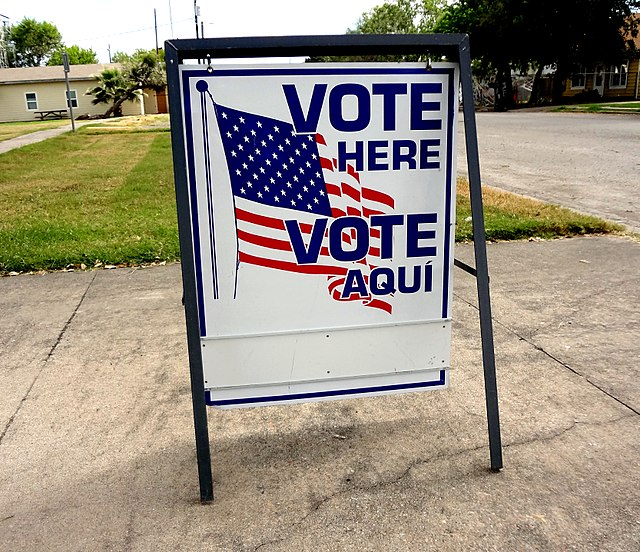
The electoral process in the United States is characterized by a high degree of administrative decentralization, with significant autonomy for counties in defining operational procedures. In this context, episodes that occurred during the 2026 primaries, especially in Dallas and Williamson counties, highlighted significant logistical challenges. Reports indicate that operational changes related to polling places and procedures led to confusion among voters, resulting in long lines and difficulties in accessing the vote. These situations motivated judicial interventions aimed at mitigating the impacts on the electoral process.
Initial
decisions sought to make deadlines and procedures more flexible but were later
challenged in higher courts. The actions of Attorney General Ken Paxton, in
this context, were interpreted in different ways: while some considered it a
defense of strict electoral legality, others assessed it as potentially
restrictive to access to the vote. These episodes reignited the debate about
the balance between electoral integrity and accessibility, highlighting
recurring tensions in the American electoral system. The controversy
demonstrates how logistical issues can acquire political and legal dimensions,
influencing public perception of the electoral process.
6. THE
ROAD TO NOVEMBER
The conclusion of the primaries and the unfolding of the observed legal disputes project a highly complex scenario for the general elections in November. The debate between the security of the electoral process and the expansion of access to voting tends to remain central to campaign strategies.
In the Republican field, the need for internal recompositing after a competitive process may influence the degree of party cohesion. Among the Democrats, the challenge lies in consolidating a strategy capable of expanding their electoral base in a historically adverse context.
Given
this scenario, Texas remains a relevant space for observing broader political
trends, functioning as an indicator, although not a determining one of dynamics
that may be reflected in the national scenario.
REFERENCES
ADIMPACT. TX
Senate ad analysis: the most expensive Senate primary on record. In:
AdImpact Blog. [S. l.], 27 fev. 2026. Available at: https://adimpact.com/blogs/tx-senate-ad-analysis-the-most-expensive-senate-primary-on-record. Accessed on: March 17, 2026.
FEDERAL ELECTION COMMISSION. Campaign finance
reports. Available at: https://www.fec.gov/. Accessed on: March 17, 2026.
FOX 4 NEWS. Texas
Senate primary becomes one of the most expensive in U.S. history. Available at:
https://www.fox4news.com/news/texas-senate-primary-most-expensive. Accessed on: March 17, 2026.
OPENSECRETS. Campaign finance data and
analysis. Available at: https://www.opensecrets.org/. Accessed on: March 17, 2026.
PBS NEWSHOUR. Takeaways
from the first elections of the 2026 midterms. Available at: https://www.pbs.org/newshour/politics/takeaways-from-the-first-elections-of-2026-midterms. Accessed on: March 17, 2026.
THE GUARDIAN.
Midterms live: election updates from Texas and other states. Available at: https://www.theguardian.com/us-news/live/2026/mar/03/midterms-live-election-updates-texas-cornyn-paxton-talarico-crockett-north-carolina-arkansas. Accessed on: March 17, 2026.
TEXAS TRIBUNE.
Texas Senate Democratic primary coverage. Available at: https://www.texastribune.org/2026/03/03/texas-jasmine-crockett-james-talarico-us-senate-democratic-primary/. Accessed on: March 17, 2026.
TEXAS TRIBUNE. Voting
changes in Dallas and Williamson counties during the 2026 primaries. Available
at: https://www.texastribune.org/2026/03/03/jasmine-crockett-dallas-williamson-county-voting-changes/. Accessed on: March 17, 2026.