 Embassy of the United States of America to Italy
1
FOREIGN POLICY AS DOMESTIC POLICY
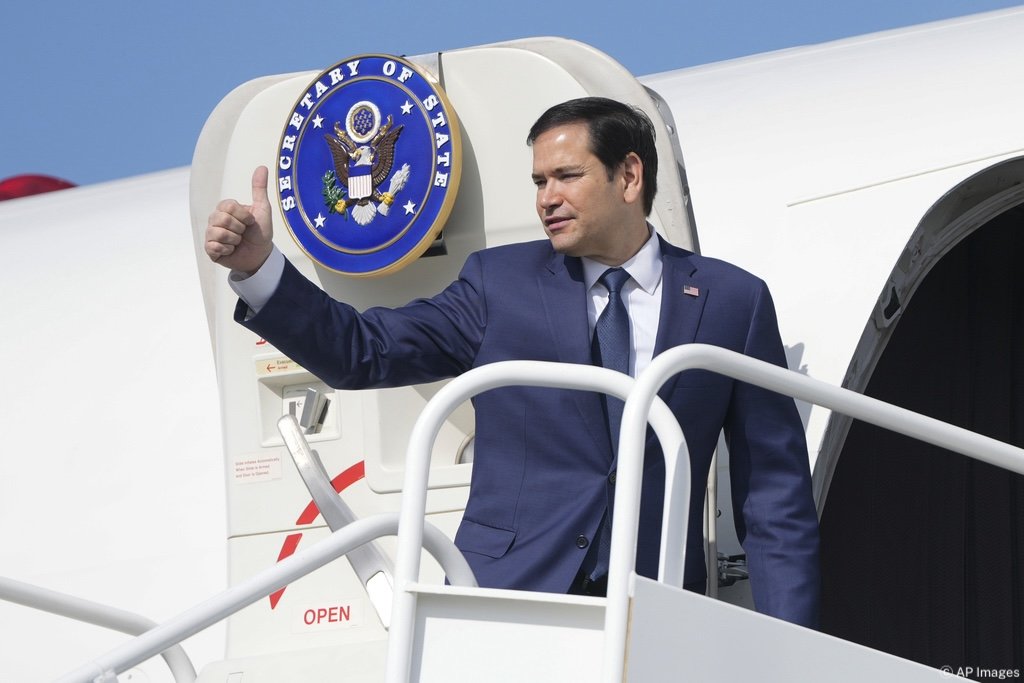
The study of relations between the United States and Latin America in the 21st century increasingly demands overcoming the dichotomy between domestic and foreign policy. The concept of "interdomestic policy" accurately describes how Washington's agendas for the Western Hemisphere are shaped by electoral pressures, demographic dynamics, and the interests of specific pressure groups within US territory. In this scenario, the current Secretary of State, Marco Rubio, stands out as a key figure in understanding this relationship. Rubio not only executes foreign policy, but he also translates it into a language that resonates directly with strategic electoral points, transforming regional security issues into assets for partisan mobilization.
The centrality of Latin America on Rubio's agenda stems largely from his ability to connect hemispheric themes to electoral sensitivities, such as border security and combating ideological models antagonistic to the Republican establishment. For Rubio, foreign policy functions as an extension of the domestic dispute, where the projection of US power in the region is used to reaffirm commitments to conservative bases, especially the Hispanic electorate of Florida. This approach places Rubio in an unique position as the architect of a diplomacy that prioritizes internal political impact as much as traditional strategic objectives.
In this way, Venezuela emerges not only as an object of strategic analysis, but as a potent political symbol. The rhetoric adopted in relation to the South American country is frequently calibrated to serve a “personal” and partisan agenda, focused on denouncing authoritarian regimes to strengthen its leadership among diasporas seeking a more assertive stance from Washington. Critics point out that this personalization of diplomacy can obscure multilateral solutions in favor of unilateral actions that guarantee immediate political gains in the domestic arena.
Thus, the introduction of Rubio to lead US
diplomacy solidifies the influence of the political memory of Cuban and
Venezuelan exile in the formulation of state policies. The tightening of
sanctions and the narrative of confrontation are inseparable from the support
base that the politician cultivated throughout his career in the Senate.
Therefore, understanding Rubio is understanding how Florida became the
laboratory for a foreign policy that seeks the ideological
"reconquest" of the continent as a tool for reaffirming conservative
power in the United States.
2
MARCO RUBIO AND THE POLITICS OF THE DIASPORA: FLORIDA AS A LABORATORY
In contemporary times, Latin America has gained particular attention from White House leaders, and Marco Rubio has emerged as the State Department leader seeking to outline the plans for this new foreign policy. However, this figure already stood out with critical positions involving the geopolitics of Latin America, something notable in his political career before being appointed to the position of Secretary, an important context for understanding the current context involving the US and the Latin American continent.
The son of anti-communist Cuban immigrants, Rubio has always shown himself to be an opponent of the Cuban regime and its regional allies, such as the Chavistas in Venezuela. After graduating from law school in 1996, he became a member of the "West Miami City Commission" in 1998 and, from that moment on, began to rise rapidly in public office, being elected to the Florida House of Representatives in 2000 and later becoming its Speaker in 2006. In 2010, he was elected Senator for Florida with almost 49% of the vote, catapulting his conservative vision and agenda into the national debate.
In this space, Rubio proved to be a conservative figure in foreign policy and participated in important debates involving tax reforms, changes in immigration rules, and defense-related issues. In addition, the then-senator used his knowledge of the Spanish language to connect with the Hispanic electorate, being the first politician to respond to Barack Obama's famous "State of the Union" address in 2013, both in English and Spanish. This visibility guaranteed the attention of Republicans, in addition to him being seen as an individual who could guide a conservative movement in the White House in the coming years.
In 2016, Rubio decided to run for the party's nomination for the presidential race but ended up losing to Donald Trump. Initially critical of the businessman, Rubio, like other prominent figures among Republicans, decided to support Trump. Since then, being re-elected in 2016 and 2022, Marco Rubio has become increasingly incisive about his positions involving Latin America, aligning himself with the Trumpist movement. In other words, the construction of his career as a senator was mainly due to strong popular support from voters who supported these positions. For example, in the 2010, 2016, and 2022 elections, Rubio's vote margins gradually increased, from 48.9% in his first election to 57.7%. Furthermore, his constant criticism of Cuba and, more recently, Venezuela, signals this justified popularity, for example, by the high number of people from these countries residing in the state of Florida, many with a conservative profile who revive ideas such as anti-communism to make Marco Rubio the guide for their positions. According to Miguel Cossio, chief operator of the “American Museum of the Cuban Diaspora for Miami”, the new US foreign policy “reflects the perspectives of a large part of the Cuban-American community, to end the regime in Venezuela and Cuba”. In addition, as Lorena Cabrera, a Miami resident, envisions, he would be “our kind of person,” referring to the Secretary of State as a representative of their positions involving Latin America.
Therefore, even decades after the Cuban Revolution, these echoes persist within the United States. It is not only the blockade of Cuba that has been maintained, but the memory of those who fled the island has built the career of a former senator, now secretary of state, who represents this conservative and even reactionary view against left-leaning regimes in Latin America.
3
FROM DOMESTIC POLITICS TO FOREIGN POLICY: HOW RUBIO FRAME LATIN AMERICA
Marco Rubio's family and political history helped shape the ideology of his view of regimes in Latin America. Regarding a better relationship between the United States and the continent, Rubio states what would be the best axis for negotiations: "dialogue with our neighbors is a vital element in dealing with migration, supply chains, and economic growth". Rubio's first international trip as Secretary of State took him to Panama, El Salvador, Costa Rica, Guatemala, and the Dominican Republic. On the other hand, the secretary uses different interview spaces to criticize some Latin American governments, such as Cuba, Venezuela, and Nicaragua, frequently attributing terms like "autocracies" that violate human rights and generate regional instability. These countries are framed as enemies of democracy and responsible for migration crises.
Marco Rubio uses the tactic of linking this political scenario with the simplistic narrative of "democracy vs. authoritarianism" to organize a US foreign policy towards Latin America, since this context would portray the United States as the savior of democracy, according to his vision. Thus, since the return of the Republicans to the White House, foreign policy towards Latin American governments has been pressured by concerns in three central areas: immigration, trade, and containment of Chinese influence. From this focus on Latin American territory, this vision is operationalized in a position shared by Rubio and the special envoy for Latin America, Mauricio Claver-Carone. The operation takes place through policies that advocate for stricter sanctions and "maximum pressure" strategies against leftist governments in Cuba, Nicaragua, and Venezuela. In addition, containing China's economic and diplomatic influence appears as a central element of this policy, being treated as a strategic challenge for the United States in the region.
More specifically, Marco Rubio's concern focuses on the economic sphere. The politician comments on his goal of replacing Chinese investments with American ones: “[...] fortunately, the United States has strong relations with several important countries in the region, and I think we have the opportunity to take advantage of this in a way that they can attract the type of investment they prefer to Chinese investment, but, at the moment, this is not available. There is no American alternative to what the Chinese are offering. I hope we can pave the way for this”. Beyond Chinese concerns, the rhetoric about authoritarian regimes and the threat to democracy are some of the important pillars of Rubio's foreign policy. In this sense, Venezuela is the classic example of an autocratic regime, called a “narco-regime,” and the symbol of the anti-American model. Therefore, this context reinforces harsh foreign policies, sanctions, and the recent direct intervention in the territory.
Conversely, the discourse of duality regarding foreign policy also
functions as a domestic political tool, reaching diverse citizens, including
the support of Latin American diaspora communities with more conservative
views, since the criticized regimes are seen as a threat to Western values.
Thus, Rubio manages to appeal to various conservative sectors and voters who
value a more interventionist foreign policy. This alignment also shapes debates
within the American political system itself, exporting domestic discourse to
the international arena as justification for interventions, uniting internal
and external objectives of US policy.
4.
VENEZUELA AS A SYMBOLIC AND STRATEGIC AXIS
The Secretary of State's ideological discourse in favor of the country's foreign interventions is based on the superiority of the United States and the use of a reinterpretation of the old Monroe Doctrine. This is evident both in Donald Trump's self-proclaimed "Trump Corollary" and in the false justification of state intervention to preserve the sovereignty of countries like Venezuela; however, such statements aim to reaffirm the United States as the hegemony of the Americas. In this sense, controversies are noted in Rubio's statements, as he claims during an interview that the US does not need Venezuelan oil, while at the same time projects for a possible expansion of refineries on the Gulf Coast have been discussed, according to emails from Patrick De Hann, one of the heads of analysis at GasBuddy. The United States still depends on a flow of imports to supply its crude oil stocks and fuel its industry, and state intervention in Venezuela has been characterized by many external agents as an attempt to reclaim Venezuelan resources so that US oil companies can refine the substrate in its crude form, given that the national infrastructure was weakened by a lack of investment and, consequently, producing less than expected. Pedro Sánchez argued that the policy led by figures like Rubio is not aimed at democracy, but rather at the "misappropriation" of Venezuela's natural resources, establishing a "dangerous precedent" where economic sanctions are used as a tool for regime change for commercial purposes.
From this perspective, the fight against Chavista authoritarianism draws the attention of Latinos from the diaspora who form its electoral base in Florida. Thus, the use of strict sanctions, coupled with diplomatic isolation and international pressure, are actions that strengthen its discourse and broaden its electoral appeal. Marco Rubio also reiterated that part of the interest in oil is justified by the strategic interests of the US so that its "adversaries" do not benefit from the commodity, as discussed earlier. This is because China, in addition to being the main competitor of the US in the dispute for the largest global economy, is also one of Venezuela's main trading partners in terms of oil purchases.
In this way, in addition to ensuring national security, the US would also place itself in a strategic and prominent position in the energy sector, imposing influence on the distribution of barrels produced in the recently invaded country. By attacking the Maduro regime, Rubio is simultaneously protecting US security interests, "fighting" drug trafficking and communicating to the conservative Hispanic electorate that he is directly involved in containing socialism, while Venezuelans who left the country because of the dictatorship have supported US intervention as a salvation from the period they went through. Finally, Rubio's policy also contributes to the worsening of the humanitarian crisis through conflicts between factions, unstable politics and increased crime, which, in turn, increases the migratory flow that the secretary himself criticizes in his internal security agenda, since the country was not prepared for an abrupt transition of power.
In short, the US strategy for Venezuela reveals a complex intersection between the pursuit of regional hegemony and strategic economic interests. By reinterpreting the Monroe Doctrine, Washington's discourse uses the defense of sovereignty and the fight against socialism as justifications for securing control over Venezuelan energy resources and neutralizing the influence of global adversaries, such as China.
The surprise kidnapping of Venezuelan Head of State Nicolás Maduro by the United States in Caracas, the country's capital, immediately triggered varied and scattered reactions among international leaders and governments. Among Latin American countries, most expressed concern and condemned the situation. Brazil, Chile, Colombia, Mexico, and Uruguay, with governments associated with the progressive wing of Latin America, repudiated the aggression and foreign interference of this attack against Venezuela. In common, the countries' statements emphasized that the United States disregarded International Law. The countries reiterated the right to self-determination and sovereignty of the Venezuelan people and state, respectively, both guaranteed by the Charter of the United Nations, where internal conflicts in Venezuela should be resolved unilaterally and peacefully by the Venezuelan people themselves. Furthermore, episodes like this set a precedent for the destabilization of the international community. The countries also appealed for a diplomatic solution through multilateral dialogue, in addition to invoking the mediation of competent international bodies to mediate the situation, such as the Organization of American States (OAS) and the United Nations.
Some of these countries, such as Brazil, Chile, Colombia, and Uruguay, participated in a high-level meeting in July 2025 in Santiago, the capital of Chile. This event brought together heads of government to discuss themes centered on defending democracy and multilateralism, combating inequalities, new digital technologies, and confronting disinformation. The summit took place at a particularly delicate moment, marked by increased tensions in Latin America, such as the imposition of tariffs by the United States on Latin American countries, in addition to the intensification of the country's military activities in the Caribbean. On the other hand, the offensive carried out by the Trump administration received support from governments associated with the conservative wing. Countries such as Argentina, Ecuador, Paraguay, and the president-elect of Chile, José Antonio Kast, highlighted the attack as fundamental to the restoration of freedom and democracy in Venezuela. The governments of Argentina and Ecuador have declared that the foreign intervention was a major step against organized crime and narcoterrorism. Among some European countries, reactions to the attack were restrained, although still critical. Members of the European Union (EU), apart from Hungary, issued a joint statement on the US attack. The bloc reiterated that the principles of International Law and the Charter of the United Nations must be respected and called on members of the United Nations Security Council to act responsibly in defending these values. The EU also stated that Nicolás Maduro's government lacks legitimacy as a democratically elected entity and advocated for a peaceful and democratic transition respecting the rights to self-determination and sovereignty of the Venezuelan people. The United Kingdom followed a similar position to the EU, stating that international law must be respected. The UK government also stated that it intends to open bilateral dialogue with the US, emphasizing the need to investigate the facts.
In his speech following the attack in Caracas, Trump invoked what he called the "Donroe Doctrine," presented as a vision of US hemispheric dominance as part of the national security strategic agenda. This conjuncture represents a practical reorientation of what is known as the "Monroe Doctrine," now reformulated into a doctrine that seeks to legitimize aggression against a country's sovereignty and enable the coercive appropriation of natural resources in coordination between the US state apparatus and its corporations. This re-actualization of the Monroe Doctrine becomes explicit when the extensive use of economic sanctions is replaced by direct intervention as state policy. In this way, national security and the domestic economy come together in the agendas of US foreign policy, where regional cooperation in the Latin American scenario is instrumentalized by direct interventions with the objectives of bilateral alignment with Washington and ensuring the breaking of relations with countries that are rivals of the US, as a way to guarantee the co-opting of Venezuelan products such as oil. On the other hand, the reformulation of US doctrine has increased the concern of European governments with their own integrity and legitimacy, since countries on the continent have been facing increasing pressure due to the more aggressive stance of the Trump administration. American threats to seize Greenland from Denmark put Europeans in a difficult position: accommodating Washington's takeover would preserve transatlantic harmony, but it would also signal that coercion and pressure are effective in Europe.
On the other hand, European resistance against American ambitions may suggest diplomatic, or even military, friction within the North Atlantic Treaty Organization (NATO), which could result in the possible withdrawal of members, or the dissolution of the organization.
The current situation involving the US, Latin America, and Europe can be interpreted as what Samuel Huntington formulated as the "clash of civilizations" in his book of the same name, published in 1996. In this sense, Huntington's predictions have come true in what the author refers to regarding the American need to maintain Latin America under its influence in the post-Cold War era. The unexpected thing, however, is the possibility of a clash of civilizations emerging within Western civilization itself, and not from a clash of distinct civilizations.
5
REAL INFLUENCE OR POLITICAL AMPLIFICATION?
When evaluating Marco Rubio's performance as Secretary of State, the fundamental question arises: is he the original architect of a new hemispheric strategy or merely an efficient amplifier of trends already present in the current administration? We suggest that Rubio acts as an institutional catalyst who uses his deep knowledge of regional dynamics to give shape and substance to the White House's "maximum pressure" rhetoric. However, his influence faces structural limitations stemming from the very nature of US foreign policy, which often prioritizes immediate economic and security interests over long-term ideological visions. The Latin American diaspora, while central to building Rubio's public image, functions as a relevant political force, but not necessarily a determining one in all dimensions of foreign policy. The Venezuelan case illustrates that, while pressure from exiles provides the necessary political legitimacy for assertive actions, the actual implementation of these policies depends on complex balances involving the energy market, containment of China, and management of migratory flows. Rubio, therefore, balances the role of spokesperson for conservative Latino communities with the need to deliver tangible results for the national "America First" agenda.
The implications for the future of the region under this leadership point to a more fragmented diplomacy guided by selective bilateralism. The trend is for the US to continue rewarding ideological allies and punishing adversaries through economic sanctions, which could exacerbate regional polarization and hinder cooperation on multilateral issues such as climate and productive integration. Rubio's strategy signals a preference for results that can be "sold" to the domestic electorate as victories for freedom, even if the cost is greater diplomatic instability in Latin American capitals.
It can be concluded, then, that Marco Rubio's legacy in foreign policy will be measured by his ability to institutionalize the influence of conservative Hispanic communities in the Washington power structure. If his approach is sufficient to promote political transitions in the region, he will consolidate himself as the strategist who realigned the hemisphere. Otherwise, his administration could be seen as a period of high-voltage rhetoric with few structural gains, reinforcing the perception that, for the United States, Latin America continues to be primarily a stage for its own internal power struggles.